

Shopper Behavior is Evolving. Strategy Should, Too
How segmentation helps us interpret evolving buyer behavior and identify the shoppers powering category growth.

In fresh produce, shopper behavior is one of the most powerful and misunderstood drivers of category performance. Broad consumer trends or viral moments may create a short-term buzz, but long-term growth depends on the behaviors of specific buyer groups.
Some shoppers purchase weekly, others seasonally, and many for specific occasions, such as hosting a celebration or preparing a game-day staple like homemade guacamole. These differences are why shopper segmentation is essential to modern produce strategy.
Grouping households into heavy, medium, and light buyers (and in some cases, more refined segments) is more than a research exercise. It reveals the underlying structure of category performance. Without a framework to interpret behavioral differences, it is easy to fall into a common shopper conversion fallacy: the belief that turning light shoppers into heavy shoppers is the key to growing category sales.
The Buyer Groups Shaping Every Category
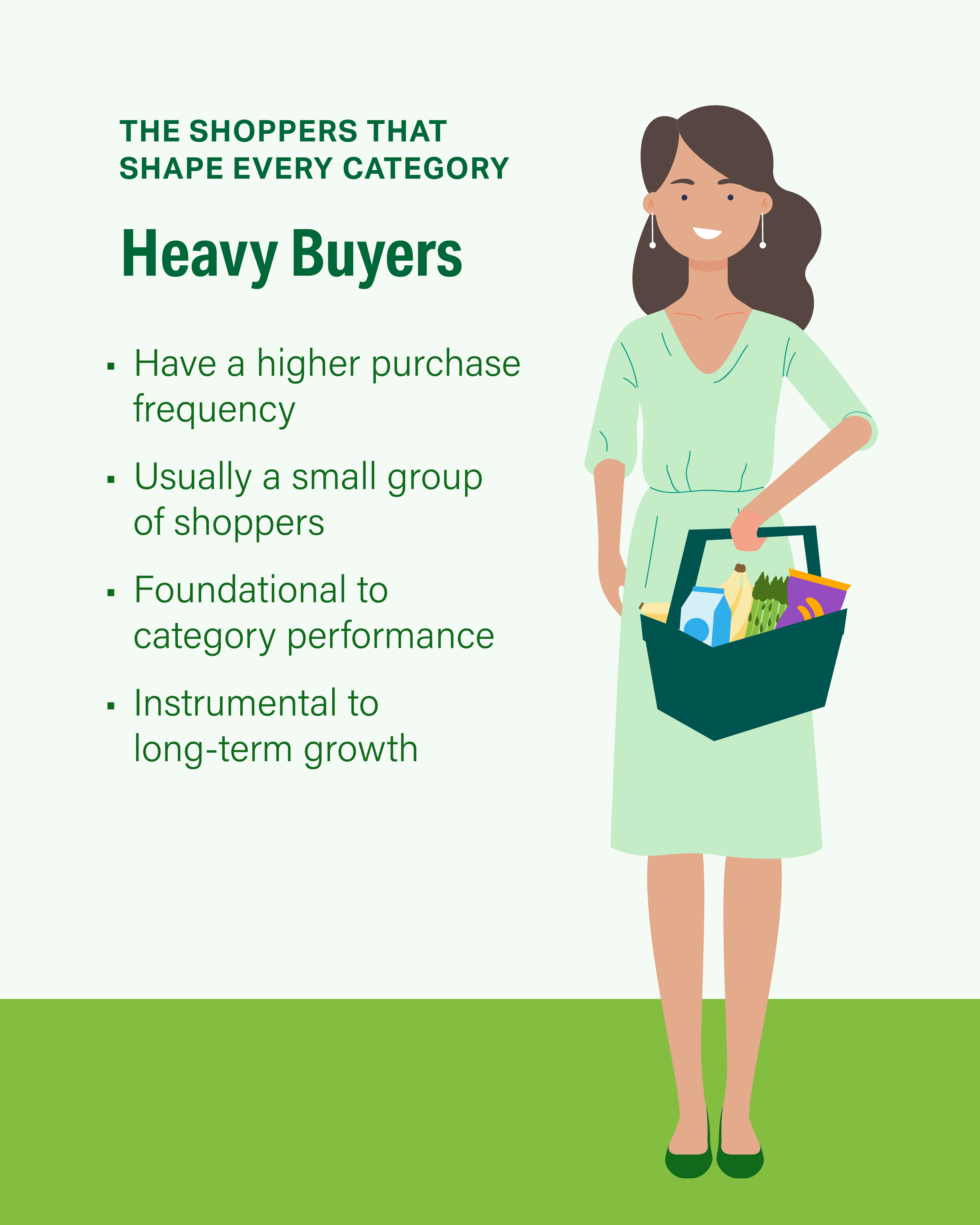

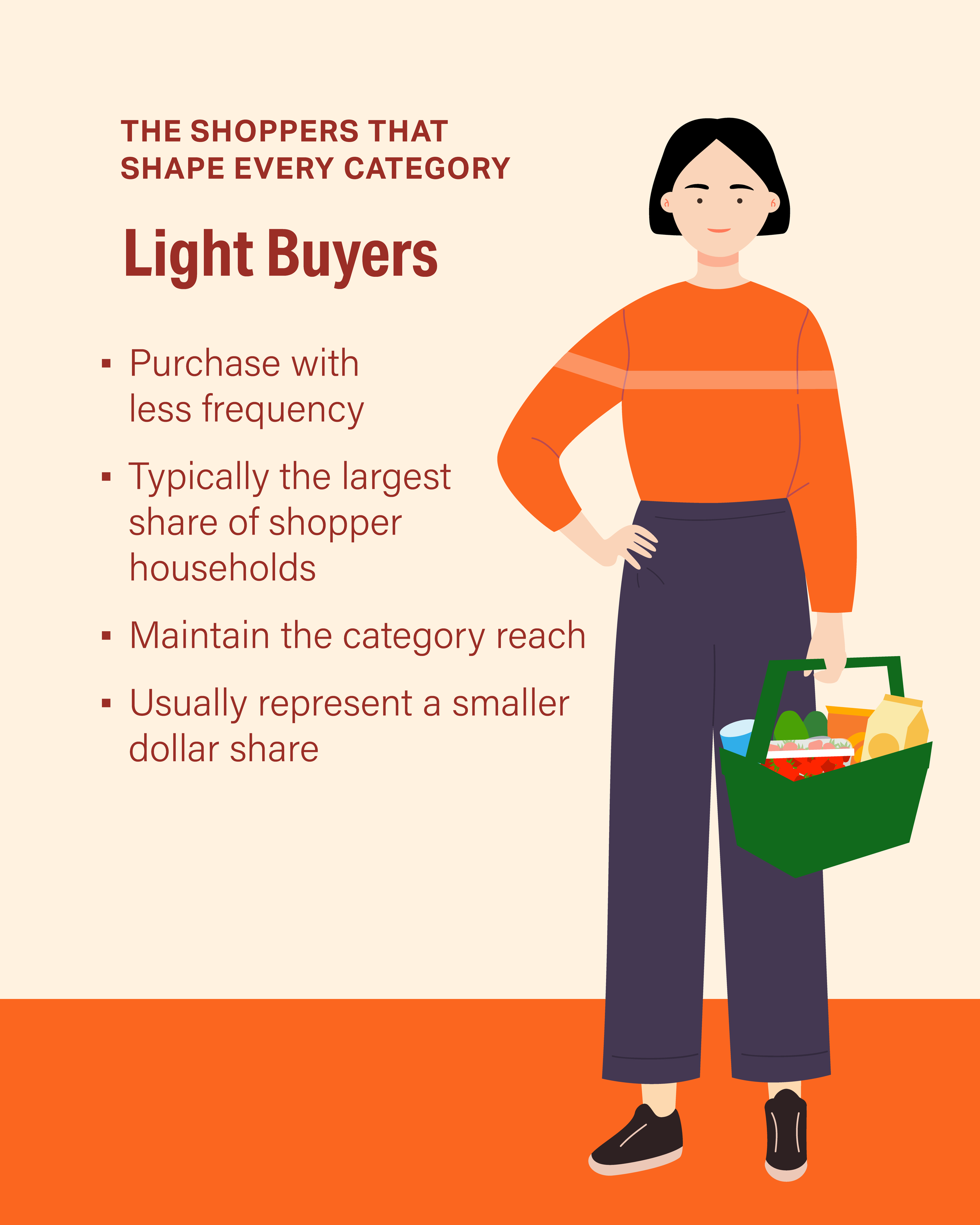
Some produce categories, like avocados, have become year-round staples with steady purchase behavior. Others, like watermelon, experience pronounced seasonal peaks. Shopper segmentation helps clarify who sustains the category during slower periods, who drives seasonal spikes, and who delivers actual incremental sales. It gives marketers and retailers the ability to allocate and deploy resources where they matter most.
Heavy buyers might be a smaller group of shoppers, but they consistently form the foundation of category performance. Opportunity lies within their purchase frequency. Sales often grow when their purchase frequency increases and flattens when they slowdown. Understanding their motivations and their behavioral shifts is instrumental to long-term growth.
Medium buyers represent a quieter source of potential. They already participate in the category but haven’t yet reached heavy-level engagement. Their growth potential comes from life changes such as marriage, family expansion, increasing household income, or evolving routines that organically increase their purchase frequency. Rather than pushing conversion, effective strategies create market conditions that make deeper engagement easy when they are ready to move up the purchase ladder. Tactics that resonate with heavy buyers often appeal to mediums as well.
Light buyers serve a different role by maintaining category household reach. They typically represent the largest share of households but the smallest share of dollars. Their role is household penetration, not acceleration. They keep a category visible and relevant across a broad shopper base, reinforcing its presence in the produce department. While some light buyers may increase engagement over time, the health of the category does not depend on converting them.
A strong category strategy considers all behavioral roles: strengthening the heavy buyer core, preparing for medium buyer progression, and maintaining the breadth that light buyers provide.
A Concentrated Core that Drives Growth
The Hass Avocado Board (HAB) has invested in shopper segmentation over the years, refining our understanding of the households that drive avocado category sales. Rather than stopping at three groups of segmentation, HAB expanded its model into five: Ultra, Mega, Super, Heavy, and Moderate. This deeper analysis revealed just how concentrated avocado performance truly is.
Ultra buyers represent only about 8% of households but account for 39% of total purchase dollars according to household panel data from HAB’s most recent research. These shoppers also drove nearly 60% of the category’s annual incremental sales. What distinguishes the Ultra segment is not basket size, but frequency. Avocados are embedded in their routines, leading to consistent repeat purchases.
When you understand the buyer, shopper targeting becomes more effective. “Segmenting avocado shoppers gave us a clearer picture of who fuels category growth,” says Alejandro Gavito, senior business insights and data services manager for HAB. “That understanding informs how we speak about the avocado consumer and helps equip industry members with insights that drive retail sales of Hass avocados.”
To better understand this Ultra segment, HAB needed to dive deeper. Demographic insights answered a critical question: Who are the shoppers that are driving sales? For marketers and retailers, this clarity makes it easier to tailor messaging, promotions, and merchandising strategies to the shoppers who matter most.
Growth Through Depth, Not Simply Reach
Watermelon experienced strong household penetration growth in recent years, adding 6.7 million new households between 2021 and 2025. Segmentation research from the National Watermelon Promotion Board (NWPB) shows that four million of these households were light buyers.
Despite this influx of light shoppers, heavy buyers still drove 59% of the category’s incremental sales. Although heavy buyers account for only 25% of shopper households, they make 63% of all watermelon purchases. These heavy buyer households spend eight times more per household than light buyers in a year.
Building on the power of shopper segmentation identifies who these core buyers are and how their demographics are shifting. “As our category continued to evolve, shopper segmentation allowed us to step back and understand how behaviors were changing,” says Megan McKenna, senior director of marketing and foodservice for NWPB.
Heavy watermelon buyers are becoming more diverse, with growth among younger and higher-income households as well as smaller households, and even increased engagement among shoppers 65 and older. This shows that multiple pathways into heavy engagement are emerging. For McKenna, the opportunity was clear. “Identifying these evolving shoppers established a strong foundation for us to help our industry optimize strategy and shopper targeting.”
Watermelon shoppers differ from avocados, but segmentation reveals similar behavioral patterns. In both categories, frequency is a defining characteristic of the heavier buyer. This reinforces an underlying reality in fresh produce: bringing in new shoppers builds breadth, but meaningful growth comes from deepening engagement with your core shoppers.
A More Shopper-Centric Way Forward
Categories can accelerate when an industry understands who is driving performance, what motivates their shopping behavior, and how to strengthen the market conditions that keep shoppers engaged. High-performing categories understand the real drivers of engagement and use these insights to guide strategic decisions across promotions, merchandising, packaging, and longterm investment.
Today’s produce marketplace is increasingly complex. Produce differs from traditional CPG in many ways: quality can shift daily, ripeness factors influence decisions, and many categories experience sharp seasonal changes that impact shopper engagement. Shopper segmentation is essential to navigating this complexity and building stronger alignment between marketing strategies and real shopper behavior.
When decisions are grounded in fact-based segmentation rather than speculation, the industry is positioned to usher in the next wave of growth in fresh produce.